Bi…A Wife, a Husband, His New Woman, and One Long Table: The Breakfast That Shouldn’t Exist
A Wife, a Husband, His New Woman, and One Long Table: The Breakfast That Shouldn’t Exist
Dramatized skit recap based on the Kountry Wayne skit “When Amber puts her foot down!” No dialogue below is presented as exact quotes from the video.
Step back and simply look at the wide shot, because the wide shot is the scandal: a long outdoor table beside a pool at a beautiful house, morning light, fall trees in the mist — and seated along it, eating breakfast like any blended modern family in a magazine, the complete personnel of this saga’s central catastrophe. Amber, the wife, who cooked it all that morning in a floral dress. Anthony, the husband, mid-divorce, honey bottle in hand, reviewing her cooking aloud. D’Nisha, the new woman, in a denim jacket, eating the wife’s French toast. And a bearded friend along the table as the scene’s designated normal person, attacking his plate like a man who has decided breakfast is breakfast. Kountry Wayne’s “When Anthony tells Amber she never cooked for him like that!” is officially about a sentence. It is actually about a table — the most impossible table in the storyline’s history, and the question of how a situation this combustible came to be served eggs. Because a year ago, this seating chart would have required security. The wife and the other woman have occupied a porch in anger, a driveway in fury’s aftermath, kitchens in cold war. The husband has been read a white-dress verdict in his own bedroom by one of them and had his hands held at sunset by the other. And now — brunch. Either the saga’s war has quietly ended in a negotiated peace nobody announced, or warfare has evolved into a form its participants can eat through. The footage refuses to say which, and in that refusal is its genius: for three and a half minutes, the audience watches four adults perform an ordinary breakfast so completely that the ordinariness itself becomes the most suspicious thing on the table. Nobody trusts peace in this storyline anymore. Especially not peace with this menu.
HOW DO YOU EVEN GET TO THIS TABLE? A BRIEF HISTORY OF THE SEATING CHART
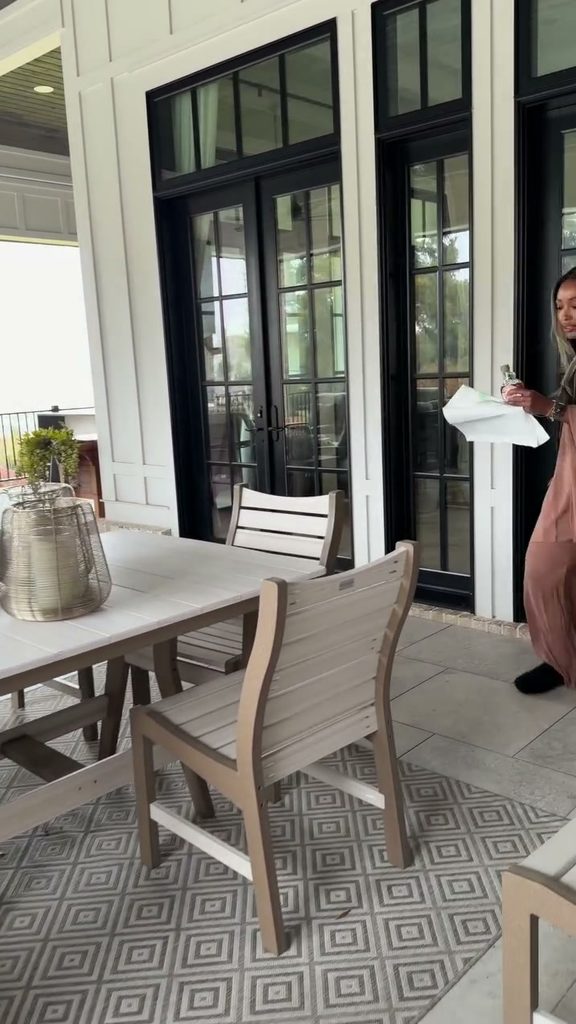
Trace the route, because the table didn’t assemble itself — it is the sediment of every scene that came before it, layered like the French toast. Layer one: the double life collapses; the wife hires an attorney; the marriage becomes a legal file with a restaurant booth for an office. Layer two: the other woman stops being a rumor and becomes a resident of the storyline — porch, driveway, sunset, a name the whole internet can spell. Layer three: the wife, having delivered her verdict and survived her breakdown, stops organizing her life around exclusion and starts organizing it around indifference — and indifference, it turns out, can set a place for anyone. Layer four: the husband, whose survival instinct has always been normalization — if everyone eats, nothing is happening; if nothing is happening, he is safe — encourages the table the way he encourages all weather that doesn’t name him as its cause. Somewhere in those layers, a breakfast became possible: cooked by the plaintiff, praised by the defendant, consumed by the evidence, witnessed by a friend. Family law has a term for arrangements where all parties share space this calmly — usually it’s “post-divorce, years later, after therapy.” This table achieved it mid-divorce, pre-decree, over eggs. Either these people are the most evolved adults on the internet, or the performance of evolved is the saga’s newest competitive sport, and the gold medal gets cooked at dawn. The friend’s presence deserves a footnote in the archaeology, because every impossible table needs its civilian. The bearded man at breakfast — glasses, grey sweatshirt, plate loaded, manner unbothered — functions as the scene’s control group: proof that a person can sit inside this geometry and simply have breakfast. He doesn’t mediate, doesn’t flinch at the review line, doesn’t appear to be tracking the war at all. He is either the best-adjusted man in the saga or its most accomplished actor, and his calm performs one crucial service for everyone else: it gives the table a temperature to match. Around him, the principals can borrow normalcy by proximity, the way you borrow a lighter. Whether he knows he’s the thermostat is unknowable. Thermostats rarely do.
THE PERFORMANCE OF NORMAL: EVERYONE’S ACTING, EVERYONE’S EATING

Audit the performances one by one, because at a table like this, eating is the only honest activity and everything else is theatre with good catering. Amber’s performance: the hostess — generous, unhurried, radiant at her own stove, a woman so visibly unbothered that the bother she is causing becomes deniable. Anthony’s performance: the connoisseur — appetite as innocence, the man so transparently enjoying breakfast that surely nothing as sordid as a love triangle could be occurring inside a person this focused on French toast; his review line, in this reading, is not cruelty but cover, the ordinary husband-jab deployed to prove how ordinary everything is. D’Nisha’s performance: the guest — composed, initial at her throat, eating what’s served, being so correct that her correctness becomes its own statement: I can sit in her house and behave; can she say the same of my porch? And the friend’s performance, if it is one: breakfast. The extraordinary thing is that the performances don’t cancel out — they compound, into a scene so functional that it indicts the entire previous year. If these four people can do THIS — cook, serve, praise, consume, raise juice glasses — the audience is entitled to ask what the war was for, and the question is not rhetorical: it redistributes blame in every direction. Maybe the adults were always capable of the table and the saga simply never let them sit down. Or maybe the table is only possible because the war’s real decisions have already been made elsewhere — in an attorney’s office, in a bedroom verdict, in a baby question asked of an honest man — and breakfast is what people do when the important paperwork of their lives is being handled by professionals. Peace breaks out, in this theory, not when people forgive, but when the outcomes stop being theirs to fight over. The divorce will divide the property. The custody of Anthony’s child will be scheduled by a calendar none of them controls. What’s left for the principals is appetite and acting — and on that evidence, they’re all going to be fine actors, and nobody at that table is starving.
WHAT THE TABLE COSTS EACH OF THEM TO KEEP SET
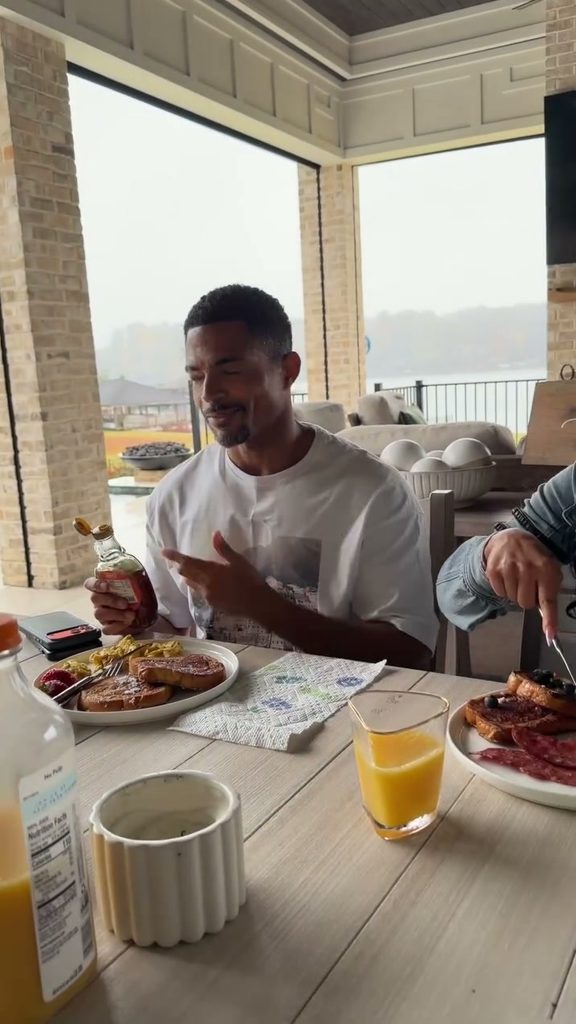
Nothing this civilized is free, so price the seats. Amber’s seat costs her the performance of generosity toward the two people who cost her a marriage — sustained, smiling, with her labor literally consumed by both — in exchange for the moral summit of the entire saga, from which she can never now be dislodged; every future outrage of Anthony’s will be measured against the morning she fed him and his new woman and outclassed the sun. Anthony’s seat costs him nothing he notices, which is his tragedy as usual: he gets to believe the table is his achievement, the big man’s peace, when in fact he’s the only person there being tolerated on terms — the guest of honor at a brunch whose hostess has already filed for the decree that ends his tenancy in her life. D’Nisha’s seat costs her the swallow-by-swallow experience of the standard, plus the knowledge that her welcome at this table is exactly as durable as her usefulness to its narrative — she is the guest in the wife’s peace, and guests, however jeweled their initials, go home at the end of the morning. And the table itself — the long, pooled, morning-lit stage of it — costs the audience its comfortable categories, which is perhaps its greatest service to the storyline. Wife, husband, other woman: the saga handed out those jerseys a year ago and the breakfast is what happens when the players sit down in them to eat like people instead of positions. The divorce lawyers will restore the categories on paper, where they belong; the custody file will sort the child into his calendars; the property will be divided into deeds with single names. But for one morning, on camera, the categories ate French toast together, and nobody’s food was poisoned except Anthony’s review of it — and even that, the table absorbed like weather. If this is the new normal, it is the strangest and most adult normal this saga has ever produced. If it is a performance, it is the finest group performance of the season, and the Academy of Petty should note that the wife cooked the catering herself.
THE LAST WIDE SHOT: WHAT THE TABLE LOOKS LIKE FROM THE STREET
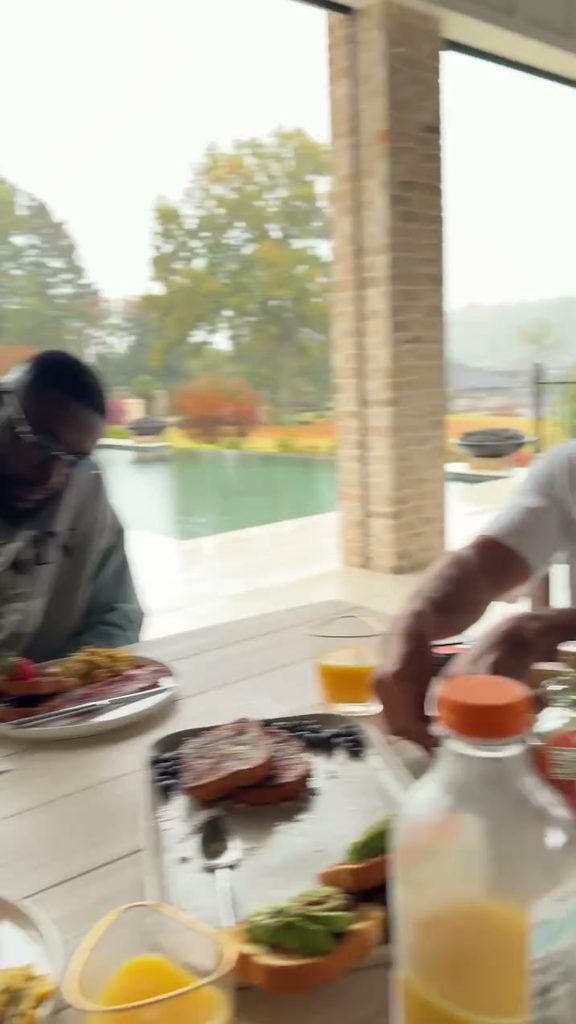
Return to the wide shot to close — the long table, the pool’s glassy patience behind it, the mist on the expensive trees, four people eating at the far end of a lawn that has hosted confrontations with better lighting budgets. From the street, it looks like wealth at rest: the good life, brunch division. From inside the storyline, it looks like the exact opposite of rest — a ceasefire photographed in its first hour, every participant aware that the camera is rolling and peace, like everything else in this saga, performs better with witnesses. What happens next in this universe is knowable in outline if not in detail: the decree will arrive, the attorneys will finish their arithmetic, some tables will never be set again. The baby Amber asked an honest man for may or may not join a future seating chart. The child Anthony made will grow up and find these videos, this table among them, and try to diagram who everyone was to each other over French toast. He’ll have better luck than most, because the diagram is brutally simple in the end. The woman at the head of it cooked. The man in the middle reviewed. The woman with the initial ate. The friend enjoyed. And the marriage — the thing the table was ostensibly seated inside of — was already a ghost at its own breakfast, present only as the reason everyone’s being so terribly, suspiciously nice. Tables outlive the arrangements that set them; that’s why we photograph them. Years from now this may be the frame the whole saga is remembered by — not the porch, not the white dress, not the bedroom floor, but the morning the war sat down, picked up its forks, and for three and a half minutes pretended so well that even the audience almost believed it. Almost. The review line gave it away. There’s always a line. At this table, it was served with the eggs.
BREAKFAST ENDS. THE PAPERWORK DOESN’T.

The table’s last deception is its temporariness — it looks like a morning, but it behaves like a document. In the weeks after such a breakfast, the saga’s true machinery resumes its shifts: the divorce grinds through its property schedules, the mortgage on the marital house awaits its reassignment, attorneys exchange the courteous artillery of family law. And in those exchanges, this table will be cited — not its menu, but its meaning. The wife’s side will call it her generosity, documented. The husband’s side will call it proof of an amicable separation, property cooperatively shared, adults at peace. The same French toast, two exhibits. That is what tables in this storyline ultimately are: depositions with better lighting, where everything consumed is also recorded. Somewhere inside that paperwork sits the only person whose future the table genuinely cannot predict — the child, whose custody calendar will be ruled by people studying mornings exactly like this one for signs of the world he’ll be raised across. Was the world at that table stable? Was it kind? The footage says the adults managed breakfast. The footage does not say the adults managed anything else. A table can hold four people and a feast; it cannot hold a childhood. That part gets decided in the rooms without pools — the attorney’s office, the evaluator’s report, the judge’s arithmetic — and the most everyone at the breakfast can honestly claim is that for one morning, they rehearsed the version of themselves they’d like the file to describe. Rehearsals end. The plates get cleared. The property gets divided, the decree gets signed, and the long table by the pool goes back to being furniture — which is all it ever was, for everyone except the four people who will spend years discovering what their seats that morning actually cost them.
TEAM THIS IS THE NEW NORMAL VS TEAM THIS TABLE SHOULD NEVER EXIST

The breakfast has produced the fandom’s most philosophical split of the season. Team This Is the New Normal reads the table as the storyline’s first grown-up morning. “They cooked, they ate, nobody bled. The divorce is lawyers’ work now — out of the kitchen, into the file where it belongs. What’s left is people who share a child, a history, a friend group, deciding to be adults over breakfast. This is what the other side of the war looks like, and it’s… fine? Let them eat.” They argue the table’s calm is not performance but exhaustion matured into wisdom — the war ended because everyone finally priced it correctly. Team This Table Should Never Exist refuses the brunch outright. “A wife feeding her replacement while her husband grades her cooking is not peace — it’s a hostage video with orange juice. Some lines don’t get un-crossed by menu. D’Nisha on that porch was honest war; this is war wearing a sundress, and the sundress fools nobody. The decree isn’t signed, the ink isn’t dry, and they want us to applaud the seating chart?” They argue the table doesn’t resolve the saga’s offenses; it anesthetizes them — and anesthesia, in this storyline, is just how the next explosion gets scheduled. Evolution or anesthesia — is this breakfast the future arriving early, or a performance that insults every honest scene that came before it? Drop your team in the comments. Because the wife cooked, the husband reviewed, the new woman ate… and the most unbelievable part is how normal it almost looked.


