Bi…The Boy Who Wasn’t There: A Porch War Fought Over a Child the Camera Never Shows
Dramatized skit recap based on the Kountry Wayne skit “When Shayla checks Anthony about bringing D’Nisha’s son to her house!” No dialogue below is presented as exact quotes from the video.
Count the people in this video and you will get it wrong. The camera shows two — a woman in a long brown dress, a man in a cream polo, a porch, a door — but the video is about five: the woman, the man, the mother who isn’t there, the child of the house who isn’t shown, and presiding over all of it, the boy. D’Nisha’s son. The boy Anthony brought to Shayla’s house, whose arrival without permission is the entire casus belli — and who does not appear in a single frame of the footage that his visit created. He is the most important person in the video and he is nowhere in it. This story is his: not the boy as he is, since the camera owes him the privacy it accidentally gave him, but the boy as he functions — the symbol each adult needed him to be, the territory he represented, the bill that will arrive in his name years from now, itemized in a currency of porches and permissions he never got to vote on. Wars are usually named for their battlefields. This one should be named for its absence. Begin with the mercy of that absence, because it is the only mercy in the footage. Whatever else went wrong on that porch, the boy was not standing on it. He did not watch a woman in a beautiful dress check his father figure at full height; he did not hear his mother’s name become a legal term in another woman’s mouth; he did not learn, in real time and at conversational volume, that his presence in a house is an event requiring authorization he cannot issue. Children in this saga are so often the audience of its wars — seated in kitchens, buckled into back seats, fluent in tones they cannot yet parse — that a war conducted entirely in a child’s absence deserves its footnote of gratitude. The adults fought over the boy. For once, they did not fight in front of him. Everything else in this story is the accounting of what that fight means for the person it was about — the only person on the porch’s entire map who never got a line.
WHAT THE BOY REPRESENTS IN HER HOUSE

For Shayla, the boy who walked through her door was never only a boy, and honesty requires saying so without making it her shame. In her house — her last jurisdiction, the one ground where her consent is still the operating system — D’Nisha’s son is a symbol with a small backpack: he is D’Nisha’s world, admitted. He is the other household, with its claims and its history and its mother’s long war with the woman who owns the porch, crossing the threshold in its most innocent and therefore most undeniable form. A mother policing a border can refuse a rival, refuse a man, refuse a rumor — but a child is the one emissary who cannot be refused without the refuser becoming the villain of the story, and some part of Shayla’s check, the part her clasped hands confess late in the video, knows that Anthony chose — consciously or by instinct — the one emissary her border could not cleanly stop. The boy in her house is a precedent wearing innocence, and precedents, in the custody wars that run beneath this saga like groundwater, are how borders actually move: not by assault, but by visit. By visit. By visit, until the exception has a key. Understand the specific geography of her fear, because it is more precise than jealousy and the comments will misname it. Shayla’s own child has one home where he is the whole story — one house where he is not a visitor, not a symbol, not half of anything, but the resident prince of a small and defended country. That house is the one Anthony brought another woman’s son into without asking. To Shayla, the visit does not read as a boy on a porch; it reads as her child’s country being quietly re-zoned — its population amended, its constitution diluted, its mother’s authority revealed as advisory in the one place it was supposed to be law. Family therapists have a phrase for what she is protecting, and it is not “turf.” It is the child’s secure base: the one address where his world is stable, his mother is sovereign, and the wars of the adults arrive, if at all, as weather outside the windows. The boy who visited is innocent. The re-zoning is not. Her check is addressed to the re-zoning — to the man who carried it through her door in the shape of a child, counting, perhaps, on the shape to shield it. And here the story must record the uncomfortable symmetry the footage insists on: D’Nisha’s son has a secure base too, and it is not this house, and the man who brought him visiting was — on the kindest available reading — trying to widen the boy’s world, to give him more porches, more welcome, more family than the borders allow. The boy represents opposite things in the two houses because the houses are at war, and children of warring houses always do. He is not a symbol to himself. He is a kid. The tragedy this video documents, under its quiet surface, is that no adult on that porch was free to treat him as only that — not the man who brought him, not the woman who checked the bringing. The war had already assigned him his meaning. The war assigns all its children their meanings. That is what makes it a war.
WHAT THE BOY REPRESENTS TO ANTHONY
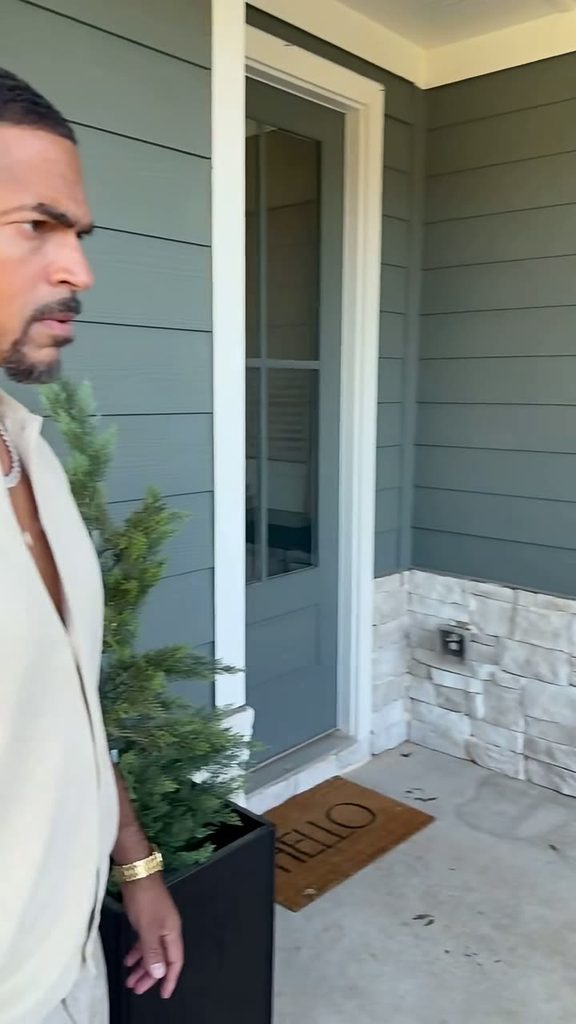
For Anthony — and his defenders will build their whole case on this section, so let it be built honestly — the boy represents the one version of fatherhood he can still perform without a permission slip from history: the present tense. Whatever Anthony has failed to be in this saga — husband, signatory, keeper of calendars — the footage of his life keeps returning to one stubborn competence: he shows up for children. He is there, in the driveways and kitchens and porches, at kid height, in real time. D’Nisha’s son is one of the children he shows up for, and a visit to Shayla’s house, in the internal geography where Anthony files his intentions, was probably not a border crossing at all. It was a father figure doing the rounds of a scattered family, imagining the scatter as a kind of wholeness — all his children, all their houses, one loose and loving country with Anthony as its traveling capital. The hand that comes to his chest late in the video is swearing to exactly that map. The map is sincerely drawn. It is also drawn entirely by him, which is the flaw the check exists to name: a country whose borders are drawn by one man’s hopes will always be invaded, in the eyes of the women who actually hold the territory, by the man who drew it. There is a deeper layer, and the story owes the boy the saying of it: Anthony may also have been showing the boy something. Men who grow up between houses — and Anthony’s whole bearing suggests a man fluent in that childhood — know the specific loneliness of being the kid whose welcome is conditional, whose bag is always half-packed, whose presence at any given address is a negotiation conducted by other people. If Anthony brought D’Nisha’s son through that door partly to prove the door could open — to give the boy one afternoon of being uncomplicatedly included in the wider family — then the visit was a gift aimed at the boy’s own memory, and its interception on the porch is a sadder event than the check’s clean logic admits. The boy will not remember the gift. He will remember, if anything survives, the border. Children always remember the borders. It is the adults who get to remember their intentions. And so the boy represents, to Anthony, the future tense as well: the hope that the next generation of this saga will not inherit the map — that the children of these warring houses might one day walk through each other’s doors as family instead of as incidents. It is a real hope, and the footage gives no sign that Anthony is lying about holding it. The check’s answer, delivered in a brown dress at full height, is that the future cannot be smuggled. It has to be negotiated — permission by permission, door by door, with the women who hold the keys — and a man who wants his children to inherit open doors must first learn to knock on them. The boy deserved the open door. He also deserved the knocking. He got neither that day, and the adults split the difference on his tab.
THE ADULTS’ VOCABULARY, THE CHILD’S BILL

Listen to the language this video runs on, because it is not the language of the porch — it is the language of the courthouse, worn smooth by use. Permission. Access. My house. His son. Her rules. Every term in the check’s vocabulary has a filing-cabinet equivalent: custody, visitation, consent, the custodial parent’s rights, the non-custodial parent’s obligations — the whole lexicon that family court built to describe exactly this geometry, a child moving between warring addresses under rules the child did not write. The adults speak courthouse on that porch without a single lawyer present, because the courthouse has long since moved into their mouths. That is what years of contested custody do to a family’s grammar: every visit becomes a filing, every favor a precedent, every door a jurisdiction. The boy at the center of it will grow up bilingual — fluent in childhood, and fluent in this: the second language of children whose parents’ love is administered by agreement. He will learn to say “my weekend” and “her house” and “ask your mother” with the unconscious precision of a diplomat. The bill for the adults’ war is always delivered in the child’s vocabulary first. Itemize the rest of the bill honestly, because this story is his and he is owed the accounting. He will one day learn — they always learn — that his visit to a house became a video watched by a million strangers; that his presence was the incident, his name a possessive in a title, his mother a party, his father figure a defendant, and the woman who owns the porch a headline. He will learn that adults he loves described his arrival in a home as a border violation and his father’s defense of it as an oath, and that both descriptions were, in their way, acts of love aimed at him and past him at the same time. Children of sagas do not get childhoods; they get archives. The kindest thing the footage does for him is the thing it did by accident: it kept his face out of it. Whatever the archive holds about the boy, it does not hold the boy. Somewhere in the saga’s future, a young man will watch this video the way the rest of us watch weather reports from before we were born — knowing it shaped his climate, unable to remember the rain. Let the record, for his sake, be precise about who owed what: he owed nothing. He was a child, brought visiting. The debt belongs entirely to the adults, and this story files it in their names. The final entry in the accounting belongs to Shayla’s child, the boy’s counterpart, the other silent party — because the check that defended his secure base also, inevitably, taught his house its lesson: that doors are borders, that the other child is an event, that welcome in his home is a matter of state. Both boys will inherit the map the adults are drawing this year, porch by porch. The hope the footage leaves — thin, real, and entirely in the adults’ hands — is that somebody in this triangle eventually draws a door on the map and labels it with a word none of them used that afternoon: welcome. The boy who wasn’t there is waiting, at some other address, for the adults to afford it.
THE KNOCK THAT NEVER HAPPENED
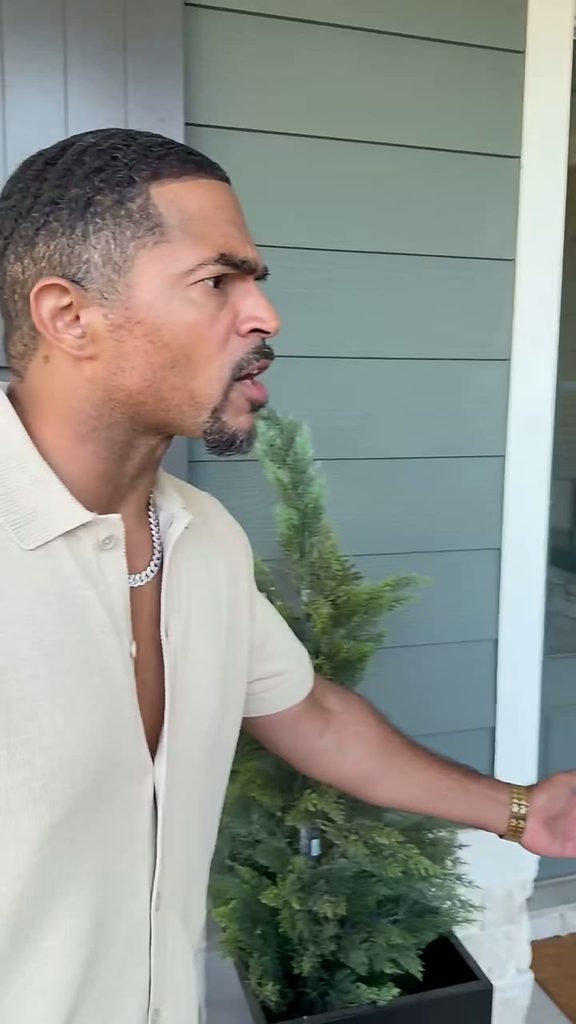
Every war has its alternate history, and this one’s is ten seconds long. In the other version of that afternoon — the one no camera got — a phone lights up on Shayla’s counter a day early, and the message is the whole difference between a visit and an incident: I’m bringing D’Nisha’s son by tomorrow, wanted you to hear it from me, say the word if it’s not a good day. In that version, whatever she answers, the boy walks through the door as a guest instead of as evidence. If she says yes, he gains an afternoon of uncomplicated welcome, the rarest gift in his young geography. If she says no, he loses nothing he ever knew he had — the visit simply happens at another address, inside the ordinary machinery of custody calendars and agreed visitation that family courts exist to bless. The knock is the entire technology by which blended families avoid becoming border wars: it converts a child from a precedent into a plan. Every custody lawyer who has ever billed an hour in these wars will tell you the same unfashionable truth — the families who survive are not the ones with the warmest feelings, but the ones whose adults learned to knock, in advance, in writing, until the knocking became so boring nobody filmed it. The boy’s tragedy in the real version is not that a woman checked a man on a porch. It is that he was transported into a headline by the absence of a ten-second courtesy — and that the courtesy’s absence, not the boy, was what the woman was actually checking. He was never the problem on that porch. He was the proof of one.
TWO BOYS, ONE MAP

The boy who wasn’t there has a counterpart, and the story is not complete until the map shows both of them. Somewhere on the other side of Shayla’s defended door is her own son — the child of the house, the resident of the secure base, the boy whose mother’s check was, at its heart, a border drawn around his peace. He doesn’t appear in the footage either. The two boys bookend the video like parentheses: the visitor who caused it and the resident it was for, both absent, both silent, both destined to inherit the map the adults are drawing this year — its doors and its tolls, its houses where each of them is whole and its houses where each of them is an event. Child psychologists who work the co-parenting wars have a name for what the map becomes if nobody redraws it: a loyalty atlas, in which every child of the saga learns to read the adults’ faces at thresholds the way sailors read weather, and to pack his feelings the way he packs his bag — lightly, and ready to move. The alternative is not complicated, which is what makes its absence so expensive. It is a calendar on two refrigerators with the same weekends circled. It is a court order boring enough to be merciful. It is child support paid and visits announced and doors knocked on, until the boys inherit a map with more welcome on it than warning. The adults on the porch are not bad people; the footage is clear about that, in her discipline and his oath alike. But the map is being drawn now, in afternoons exactly like this one, and the boys will navigate by it for sixty years. The check, the plea, the clasped hands, the hand on the chest — all of it is cartography. The children are the territory. They always were.
THE DEBATE: TEAM PROTECT THE CHILD’S PEACE VS TEAM KIDS BELONG IN BOTH HOMES

Team Protect The Child’s Peace argues from the secure base: a child’s home must be the one place where the wars do not enter, and a mother who lets unvetted visits amend her household’s population is spending her child’s stability on an adult’s convenience. Their case honors Shayla’s check as a peacekeeping act — not against the boy, whom she never indicts in a single frame, but against the precedent that would make her child’s home a venue for every improvisation Anthony’s blended hopes produce. Peace, for this team, is not the absence of the other child; it is the presence of rules — asked permissions, agreed visits, doors that open by arrangement instead of by surprise — because children relax inside rules the way they relax inside bedtime: completely, and only when the rules hold. The boy’s peace, they’ll add, is protected by the same principle at his own house. Borders are not the enemy of children. Surprises are. Team Kids Belong In Both Homes answers that the map is the harm: that every border drawn between the saga’s houses is drawn, in the end, through the children, who will grow up fluent in which addresses they are allowed to be whole at. Their case honors Anthony’s instinct — clumsy, unpermitted, and aimed at a future where the boy walks through family doors as family — and warns that a childhood administered like a custody agreement produces adults who experience love itself as a scheduled visitation. They will concede the consent principle and still name its price: the boy learned, or will learn, that his presence requires authorization — and a child who learns that learns to make himself smaller at every threshold for the rest of his life. Belonging, for this team, is not a precedent to be feared. It is the entire point, and adults who cannot yet afford it should at least stop billing the children for the installments. The judges’ table closes the boy’s file with the only verdict the footage supports: the child was innocent, the border was real, and the man who made those two facts collide owes both houses an apology and both boys a knock on the door next time — in advance, in daylight, in the boring currency of permission that is, in the end, just love with its paperwork done. Team Protect The Child’s Peace, or Team Kids Belong In Both Homes? Vote gently. Somewhere off-camera, the subject of this entire debate is waiting to be told where he’s allowed to go.


