When Anthony Asked: “Who Is It?
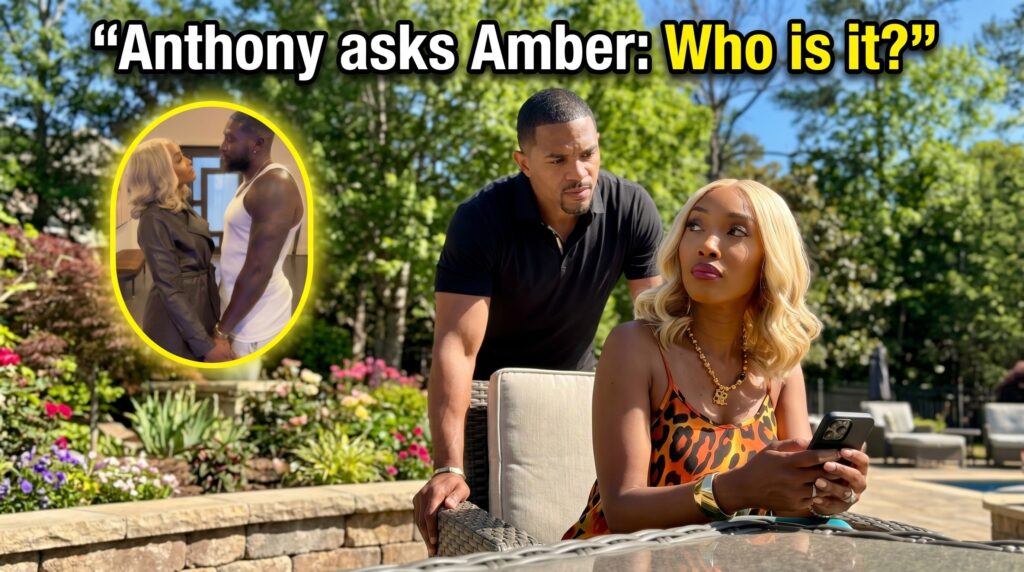
When Anthony Asked: “Who Is It?” — A Story of Love, Doubt, and Breaking Trust
1. A Normal Day That Didn’t Feel Normal
It started like any other evening, the kind where nothing seems out of place at first glance, but something in the air feels slightly heavier than usual. Anthony came home expecting peace, maybe a quiet moment with Amber after a long day. But the moment he stepped inside, he noticed something that didn’t sit right with him.
Amber was dressed unusually. A trench coat indoors. In warm weather. That alone was enough to trigger questions in Anthony’s mind. He paused for a second, watching her carefully, trying to understand what he was seeing. It wasn’t just about clothes—it was about behavior, timing, and the feeling that something wasn’t being said out loud.
And then, in a low but sharp voice, he asked the question that changed the tone of the entire night:
“Who is it?”
2. The Question That Opened a Door
The question wasn’t simple. It wasn’t casual. It carried weight, suspicion, and years of unspoken frustration. Amber turned slowly, as if she had expected this moment at some point, but still wasn’t fully ready for it.
“What are you talking about?” she replied, trying to sound calm.
But Anthony wasn’t calming down. His eyes were locked on her, searching for answers in her expression, in her silence, in everything she wasn’t saying. He repeated himself, louder this time.
“Who is it, Amber?”
In that moment, the room stopped feeling like a home. It felt like a courtroom, where every word could be used as evidence.
3. Suspicion Begins to Take Over
Anthony pointed out the obvious contradiction. It was warm outside, yet Amber was dressed as if she was hiding something—or someone. To him, it didn’t make sense. And when things don’t make sense in a relationship already filled with cracks, the mind starts filling in the blanks.
Amber tried to defend herself, saying she just “gets cold sometimes,” especially at night. But the explanation felt too quick, too rehearsed, like something said before.
That only made Anthony more convinced that something deeper was going on. He wasn’t just hearing her words anymore—he was questioning everything behind them.
4. The Argument Escalates
What started as a question turned into a full confrontation. Voices rose. Emotions sharpened. Every sentence became a weapon.
Anthony accused Amber of hiding things, of being dishonest, of treating him like he was blind to what was happening right in front of him. His frustration wasn’t just about this moment—it was about everything that had built up over time.
Amber, instead of backing down, pushed back. She refused to accept being painted as the villain. She reminded Anthony that trust had been broken long before this night, and that he wasn’t innocent in their history either.
Now the argument wasn’t about the trench coat anymore. It was about everything they had ever survived—or failed to survive—together.
5. When Blame Becomes the Shield
Amber shifted the direction of the conversation. Instead of answering the accusation directly, she turned it back on Anthony. She questioned his intentions, his past behavior, and even suggested something deeper—that maybe he wanted her to be guilty so he could justify his own decisions.
It was no longer a simple argument. It became psychological warfare.
Each of them tried to protect their own truth by attacking the other’s. And in doing so, they revealed something painful: neither of them fully trusted the other anymore.
6. The Symbol of the Trench Coat
Strangely, the trench coat became more than just clothing. It became a symbol of secrecy, distance, and emotional walls.
For Anthony, it represented hidden truths—something being covered up, both literally and emotionally. For Amber, it became a target of unnecessary suspicion, a simple item being turned into evidence of betrayal.
That’s what toxic relationships often do. They take small things and turn them into proof of everything wrong.
7. The Breaking Point
As the argument continued, the emotional distance between them grew wider. Amber eventually expressed something deeper—not just anger, but exhaustion.
She didn’t want more arguments. She didn’t want constant accusations. She wanted freedom. Not necessarily from love, but from the constant cycle of distrust and conflict.
Anthony, however, was stuck in his own pain. He couldn’t separate past wounds from present reality. Every word from Amber felt like another confirmation of his fears.
And that was the real tragedy—not just what they were arguing about, but what they had already become to each other.
8. Two People, Two Realities
By now, it was clear they were no longer living in the same emotional world.
Anthony lived in a reality where trust had already been broken, and everything needed proof. Amber lived in a reality where she felt constantly judged, constantly accused, and never truly believed.
Both felt misunderstood. Both felt attacked. And both were trying to survive the relationship in their own way.
But survival and connection are not the same thing.
9. The Silence After the Storm
Eventually, the intensity of the argument began to fade. Not because anything was solved, but because exhaustion replaced anger.
There was a silence in the room that felt heavier than the shouting. The kind of silence that doesn’t bring peace—but distance.
Neither of them had won. Neither of them had truly been heard.
And that is often how relationships end—not with a final answer, but with emotional fatigue.
10. The Unanswered Question
The question “Who is it?” was never really answered. And maybe that was never the point.
The real question underneath it all was much deeper:
When trust is gone, can love still survive?
For Anthony and Amber, the answer remained unclear. What was clear, however, was that both of them were standing on the edge of something that could no longer be easily repaired.
Sometimes relationships don’t end with betrayal. Sometimes they end with too many questions and not enough trust left to believe any of the answers.
And in that space, even love starts to feel like doubt.