Lou Holtz, Legendary College Football Coach and Broadcaster, Dies at 89
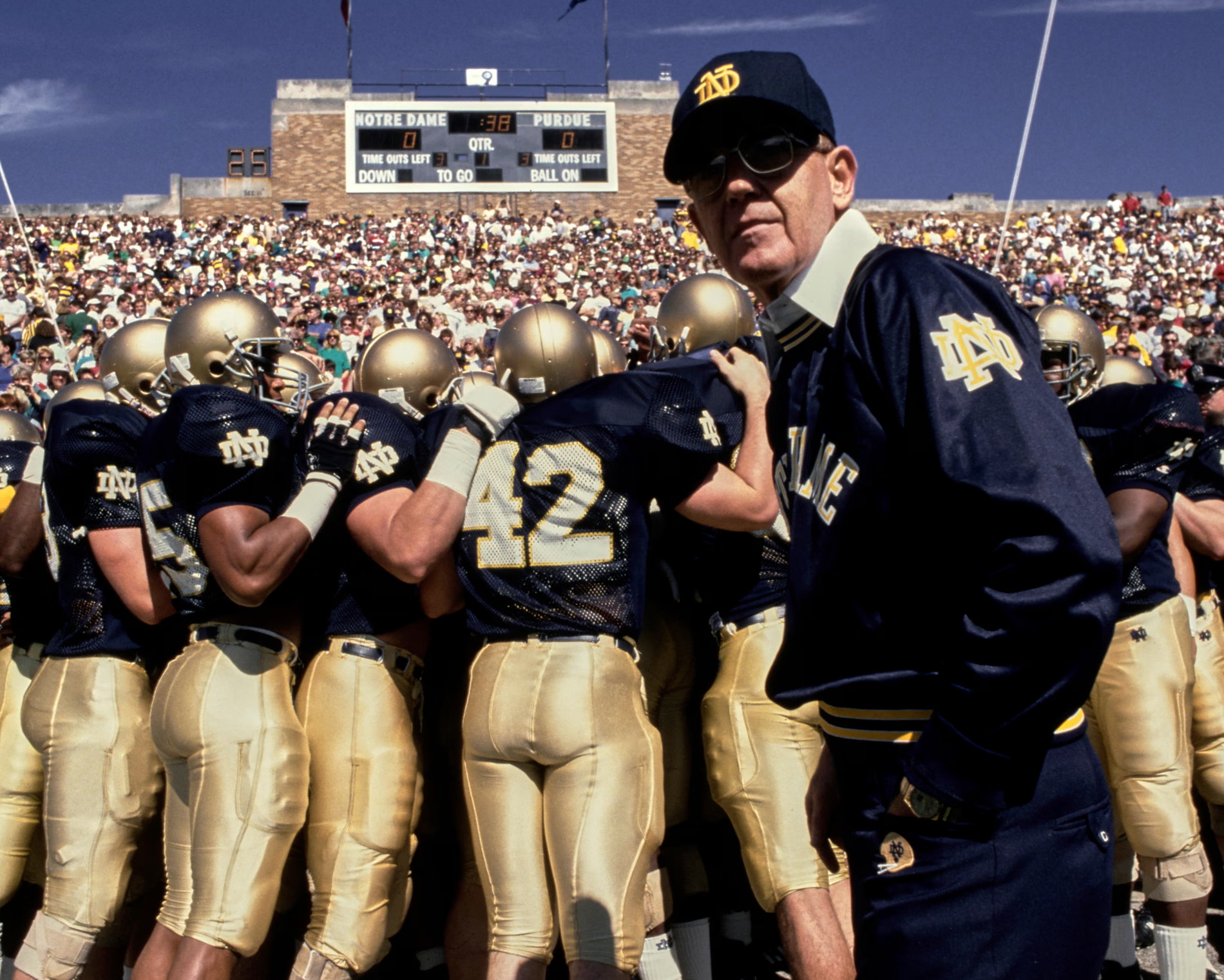
The world of college football is mourning the loss of one of its most iconic figures. Lou Holtz—a Hall of Fame coach who transformed struggling programs, led teams to championships, and later became a beloved television analyst—has died at the age of 89. His family confirmed that he passed away on March 4, 2026, in Orlando, Florida, surrounded by loved ones.
For more than three decades, Holtz stood among the most influential leaders in college football. His career combined remarkable coaching achievements, motivational leadership, and an unmistakable personality that left a lasting mark on players, fans, and the sport itself.
Early Life and Humble Beginnings
Louis Leo Holtz was born on January 6, 1937, in Follansbee, West Virginia, and grew up in nearby East Liverpool, Ohio. Raised in a working-class family—his father worked as a bus driver—Holtz learned discipline and perseverance early in life.
Despite not being heavily recruited as an athlete, he walked on to the football team at Kent State University, where he played linebacker while completing a degree in history in 1959.
Holtz later earned a master’s degree from the University of Iowa, beginning a coaching journey that would eventually span more than 30 years.
His early experiences shaped his coaching philosophy—one centered on discipline, preparation, teamwork, and strong moral values.
Building a Coaching Career
Holtz began his head coaching career in 1969 at College of William & Mary. Over the next three decades, he coached at several major programs, including:
- North Carolina State University
- University of Arkansas
- University of Minnesota
- University of Notre Dame
- University of South Carolina
He also briefly coached in the NFL with the New York Jets in 1976.
Across 33 seasons, Holtz compiled a remarkable 249-132-7 record, making him one of the most successful coaches in college football history.
One of his most unique accomplishments was becoming the only coach to lead six different college programs to bowl games.
The Notre Dame Years: A Golden Era
Holtz’s greatest legacy came during his tenure at University of Notre Dame, where he served as head coach from 1986 to 1996.
At the time he arrived, the historic program had struggled to regain its dominance. Holtz quickly rebuilt the team into a national powerhouse.
His crowning achievement came in 1988, when Notre Dame finished a perfect 12–0 season and won the national championship after defeating West Virginia Mountaineers in the Fiesta Bowl.
Under Holtz, Notre Dame also achieved:
- 100 victories during his tenure
- Nine consecutive bowl appearances
- A 23-game winning streak across the 1988–1989 seasons
He introduced several traditions that still define the program today, including the famous “Play Like a Champion Today” sign in the locker room.
Holtz’s leadership restored Notre Dame to elite status and cemented his reputation as one of the greatest coaches in the sport.
Coaching Philosophy and Leadership
Holtz was widely known for his motivational style and storytelling ability. Players and colleagues often described him as a master communicator who could inspire confidence and discipline.
His coaching philosophy focused on three principles:
- Accountability and discipline
- Team-first mentality
- Relentless preparation
Holtz believed that success in football—and life—came from preparation and character. His speeches and locker-room talks became legendary among players and fans.
Later Coaching Career and Retirement
After leaving Notre Dame in 1996, Holtz eventually returned to coaching with the University of South Carolina, where he led the Gamecocks from 1999 to 2004.
He helped rebuild the struggling program, leading them to multiple bowl appearances before retiring from coaching in 2004.
Broadcasting Career
Following retirement, Holtz transitioned into television, becoming a college football analyst for ESPN and previously CBS Sports.
His energetic commentary, humor, and distinctive voice made him a popular figure on college football broadcasts. Fans appreciated his insight and enthusiasm for the game.
Holtz remained a prominent presence in sports media until he stepped away from broadcasting in 2015.
Honors and Recognition
Holtz’s contributions to football earned him numerous honors, including:
- Induction into the College Football Hall of Fame in 2008
- Multiple National Coach of the Year awards
- The Presidential Medal of Freedom, awarded in 2020 by Donald Trump
These recognitions reflected his enormous impact on American sports and leadership.
Personal Life
Holtz was married to Beth Barcus Holtz for nearly six decades until her death in 2020. The couple had four children, including Skip Holtz, who followed in his father’s footsteps as a football coach.
Holtz was also known for his strong Catholic faith and frequently gave motivational speeches after retiring from coaching.
He spent his final years living in Orlando, Florida.
Tributes From the Football World
Following news of his death, tributes poured in from across the sports world. Coaches, players, and fans praised Holtz not only for his victories but also for his ability to mentor young athletes and shape lives beyond football.
Many described him as a teacher, motivator, and father figure to generations of players.
A Lasting Legacy
Lou Holtz’s legacy extends far beyond wins and championships. His influence can be seen in the traditions he created, the players he mentored, and the programs he revitalized.
Few coaches in college football history combined strategic brilliance, inspirational leadership, and personality quite like Holtz.
As the football world reflects on his life, one truth remains clear:
Lou Holtz didn’t just coach football—he shaped generations of athletes and left an enduring imprint on the game.
Related Posts