Pakistan Announces Rs 80000 Subsidy on Electric Bikes – Full Details & EV Policy 2025
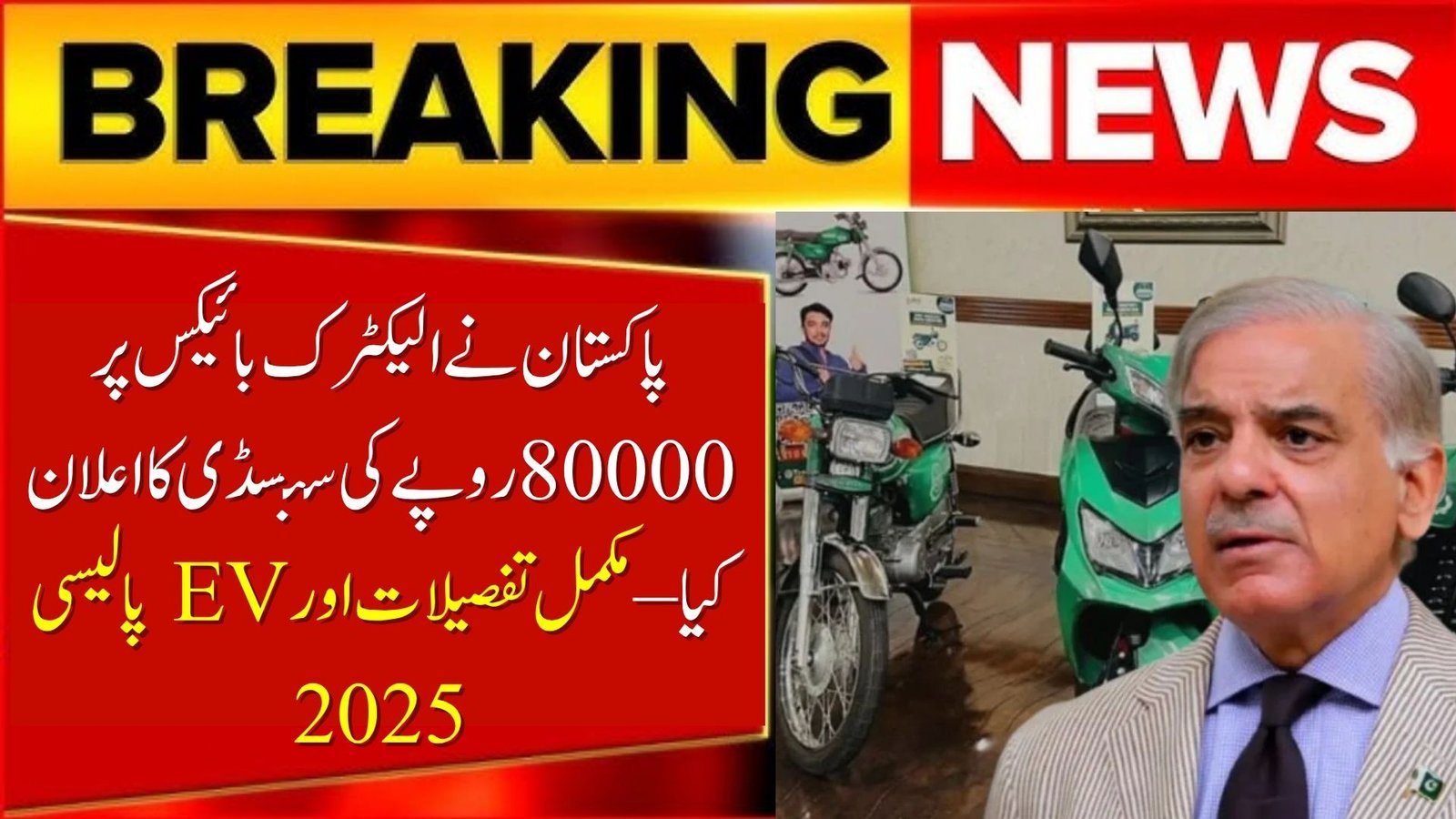
Pakistan Announces Rs 80000 Subsidy on Electric Bikes
The Government of Pakistan has taken a major step toward promoting clean energy and tolerable flexibility by announcing a subsidy for electric bikes (e-bikes). While some media reports reference Rs 50,000 as the subsidy, the broader policy context indicates a dynamic subsidy structure under the Nationwide Electric Vehicle (NEV) Policy 2025‑30. The aim is to reduce dependence on introduced fuel, improve urban air excellence, and support local manufacturing of EVs and components.
Pakistan Announces Rs 80000 Subsidy on Electric Bikes
| Field | Details |
|---|---|
| Program Name | Electric Bike Subsidy & EV Policy 2025-30 (Pakistan) |
| Start Date | Policy officially launched June 2025 |
| End Date / Duration | Policy timeframe: 2025-2030 |
| Subsidy Amount | Various figures: ~Rs 50,000 per e-bike (scheme) |
| Applicable Vehicle | E-bikes (approx price around Rs 250,000) reported |
| Method of Application | Digital/online platform via federal portal |

Overview of the Electric Bike Subsidy & EV Policy 2025
The federal government unveiled the National Electric Vehicle (NEV) Policy 2025-30 as a key component of Pakistan’s drive toward cleaner transport and industrialisation. As part of this policy, a subsidy scheme for electric two- and three-wheelers (including e-bikes) has been announced. For example, the government allocated Rs 9 billion in subsidies for the fiscal year 2025-26 to support 116,053 e-bikes and 3,171 e-rickshaws.
While some public commentary talks about an Pakistan Announces Rs 80000 Subsidy on Electric Bikes on e-bikes priced around Rs 250,000, official publicly-confirmed figures mention lower amounts (e.g. ~Rs 50,000) at this stage. This article explains the policy, how it works, eligibility, benefits, challenges, and what to expect in the coming years.
More Read: Benazir Kafalat Face Verification If Fingerprint Not Match In 2025
Key Features of the EV Policy & Subsidy Scheme
Subsidy and Incentives
- Under the NEV Policy, e-bikes and e-rickshaws are targeted for subsidies. The first phase covers 116,053 electric bikes and 3,171 e-rickshaws.
- A figure of Rs 50,000 per e-bike has been reported in several sources.
- The policy also covers broader incentives for 3-wheelers and 4-wheelers. For example, subsidies of up to Rs 65,000 for electric 2-wheelers, Rs 400,000 for 3-wheelers and up to Rs 15,000/kWh for 4-wheelers.
Targets and Local Manufacturing
- One of the central targets: 30% of all new vehicle sales by 2030 should be electric.
- Localising manufacturing is also a key goal: the policy envisages a shift to domestic production of EV parts (batteries, chargers, motors) within 2-3 years.
- Infrastructure targets include setting up 3,000 charging stations nationwide by 2030 and installing 40 fast chargers on motorways as part of the early rollout.
Reduced Charging Cost
- The policy mentions a new commercial electricity tariff for EV charging: around Rs 39.70 per kWh, down from higher rates.
- This reduction makes EV charging significantly cheaper compared to fuel-powered vehicles and supports the daily affordability of e-bikes and other EVs.


Why the Government Introduced This Subsidy
Reducing Fuel Imports
Pakistan spends billions of dollars each year on oil imports. According to the policy document, shifting to EVs can save around 2.07 billion litres of fuel annually, translating into nearly US$1 billion in foreign exchange savings.
Supporting Clean Transportation
Traditional motorbikes and rickshaws are significant contributors to urban air pollution in major Pakistani cities. The electric bike subsidy and EV policy aim to improve air quality, reduce health-cost burdens, and modernise urban mobility.
Boosting Local Manufacturing & Jobs
By incentivising EV manufacturing and localisation of parts, the policy seeks to strengthen the domestic automotive-components industry, generate new jobs, and reduce reliance on imported parts and technology.
More Read: BISP 8171 Balance Check: How to Confirm Your ₨13,500 Payment Online and Offline
How to Apply for Pakistan Announces Rs 80000 Subsidy on Electric Bikes– Step by Step
Step 1: Check Eligibility
- Individual must typically be between 18-65 years of age for e-bike scheme.
- Vehicle price is referenced around Rs 250,000 for e-bike in earlier announcements.
Step 2: Choose Approved Manufacturer/Model
You must select an e-bike from approved manufacturers or a model eligible under the scheme (check the list once the scheme is launched).
Step 3: Submit Application via Digital Platform
The policy commits to a “fully digital platform” for application submission, verification and disbursement of subsidies.
Step 4: Pay Remaining Amount & Installment Plan
Since the subsidy covers part of the cost, the remaining amount is payable by the buyer through cash payment or instalments, according to scheme details. For example, e-bike price ~Rs 250,000, subsidy ~Rs 50,000, remainder to be covered by buyer or loan.
Step 5: Delivery & Registration
Once verified and payment completed, the vehicle is delivered and registered. The buyer should keep all documentation for warranty, service and compliance.

Benefits for Consumers, Industry and Environment
Consumer Benefits
- Lower upfront cost because of subsidy – more affordable e-bikes for everyday users.
- Lower operational cost: cheaper charging makes commuting/per use cheaper than petrol bikes.
- Access to modern, clean vehicle technology with lower maintenance.
Industry Benefits
- Boost to local manufacturing, localisation of parts, and supply chain development.
- Increase in jobs in production, assembly, service and infrastructure (charging stations).
- Attracting investment in green mobility and parts ecosystem.
Environmental & Economic Benefits
- Reduced carbon emissions and cleaner air in large urban centres.
- Reduced dependence on fuel imports and improved macro-economic resilience.
- Technology shift aligning Pakistan with global EV trends and climate objectives.
More Read: BISP 8171 Digital Payments November 2025 – How to Receive Payment Step by Step Guide
Challenges & Concerns Raised
- Some ambiguity in public announcements: for example, the article mentions “Rs 80,000 subsidy” though official documents reference lower amounts (~Rs 50,000). It’s important to verify final published notifications.
- Charging infrastructure rollout is still nascent: the target number of stations is large (3,000 by 2030) but current coverage is limited.
- Ensuring fair allocation of subsidies, preventing misuse, and monitoring quality and service standards will be key.
- Local manufacturing target is ambitious: achieving high localisation within two years may be challenging given supply-chain and investment constraints.

Future Roadmap & What to Expect
The Pakistan Announces Rs 80000 Subsidy on Electric Bikes sets long-term goals for Pakistan:
- By 2030, aim for 30% of new vehicle sales to be electric.
- Large scale manufacturing of EVs/parts in Pakistan, with localisation targets (e.g., 90% parts by some sources) within next few years.
- Massive expansion of charging infrastructure, battery-swapping networks, and integration of EV charging into new building codes.
If implemented effectively, this policy could make electric bikes and vehicles commonplace on Pakistan’s roads, promoting greener transport, job creation, and industry growth.
Final Thoughts
Pakistan Announces Rs 80000 Subsidy on Electric Bikes subsidy and the broader NEV Policy 2025-30 mark a significant shift. While details such as “Rs 80,000 subsidy” for e-bikes may still need official confirmation, the direction is clear: making electric mobility more affordable, boosting local manufacturing, reducing pollution and fuel imports.
If you are a potential buyer of an e-bike or a farmer, student or commuter considering an electric option, this is a timely opportunity. Be sure to keep an eye on official notifications for the exact subsidy amount, approved models, application platform and eligibility criteria.
More Read: BISP Double Payment 2025 Eligibility Requirements
Related Posts