HA…The Estate Saw Everything A Mansion, a Lawn, and the Poorest Moment of the Season
Dramatized skit recap based on the Kountry Wayne skit “When Amber puts her foot down!” No dialogue below is presented as exact quotes from the video.
There are settings that flatter their inhabitants and settings that expose them, and the stone mansion that presides over Kountry Wayne’s “When Shayla asks Wayne how long he’s known about Iman and Delicia!” performs the second service with an almost vindictive thoroughness. It is, by the storyline’s standards, the summit of having arrived: stone elevations, sculpted hedges twisted into green exclamation points, a lawn that pours downhill in one unbroken emerald gesture toward a quiet road where a silver Cybertruck can park without a single neighbor complaining. Golden hour gilds all of it. And into this postcard of insulation walks the one thing insulation is purchased to prevent — consequence, in a red dress, at a run. The estate’s whole purpose, architecturally speaking, is to keep scenes like this one on the other side of its hedges, and the afternoon’s quiet scandal is how completely it fails: the sprint happens ON the lawn, the fall happens ON the pavement, the aftermath happens IN the grass, at ground level, in full view of the double-height windows. The property records everything with the fidelity of a court stenographer. Half a million people have now toured Wayne’s estate, and the tour’s souvenir is not envy. It is the knowledge of exactly what his money could not keep off his grass. Estates like this one appear across the saga’s geography as arguments — Amber’s great room arguing that the wife’s venue decides the petitioner’s welcome, Piarry’s townhouse arguing that a guest’s authority is only ever borrowed — and Wayne’s is the grandest argument of all: that altitude can substitute for honesty. The lawn literally slopes; everyone who enters it is arranged by height, the house enthroned at the summit, the road of ordinary life below. Notice how the afternoon’s cast sorts itself along the gradient. At the top, by the house and the car, stands the owner: beige, composed, surveying the emergency from the elevation his entire life has been engineered to provide. At the bottom, in the grass, sits the emergency itself, in red, with her friend descending the slope to join her. Between them — the whole insult of the design — runs the most expensive lawn in the storyline, a green moat of manicured distance, which the owner declines to cross and the injured party crossed at a sprint just to file her question. Property people call that a view. The audience, by now fluent in this saga’s real estate, calls it what it is: the exact width of Wayne’s willingness, measured in grass. It held. He didn’t.
THE HOUR, THE TRUCK, THE HEDGES: THE SET DRESSES ITS OWN CONFESSION
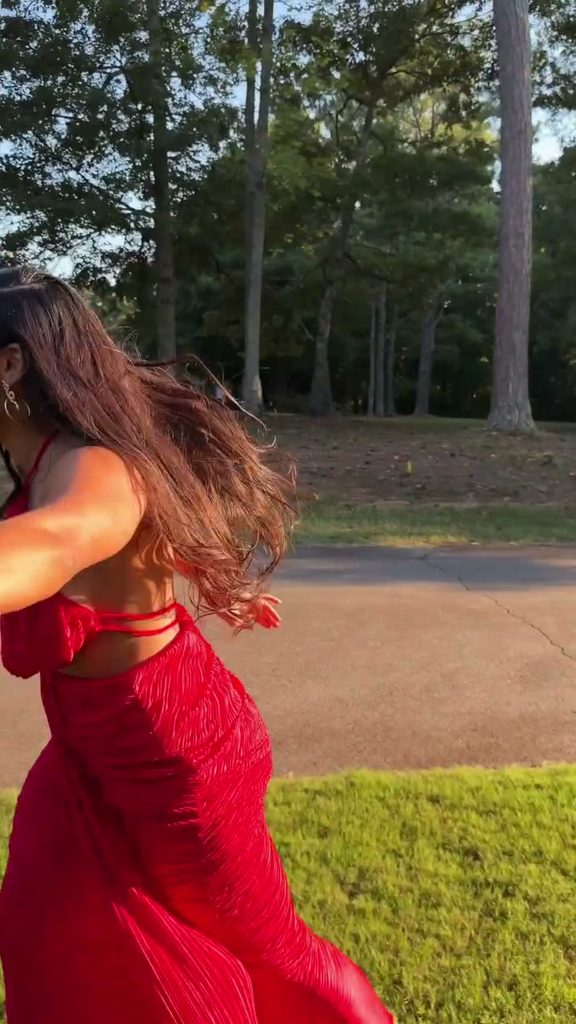
Golden hour deserves its credit as this scene’s unindicted co-conspirator, because the light is doing commentary no editor could improve. It arrives slanted and forgiving, the hour photographers pray for, and it gilds everyone in it impartially — the sprinting woman becomes a silhouette with a comet-tail of hair, the seated woman becomes a madonna of the suburbs, even the man by the car is laundered by it into something resembling thoughtfulness. But light this beautiful has a side effect the estate’s owner may not have budgeted for: it makes the footage immortal. Ugly truths in bad light get forgotten; they blur into the saga’s general weather. Truths photographed at golden hour, against stone and spiral hedges, get screenshotted, framed, and remembered at the resolution of real estate photography. The driveway confession was a noon event, harshly lit, and it still owns the season — imagine what this lawn will own, given its cinematography. Wayne’s estate has accidentally produced the most beautiful evidence in the storyline: every hedge in place, every blade accountable, and in the middle of the composition its owner standing at the top of his own gradient, lit like a Renaissance patron, declining to walk down it. A cheaper house would have been kinder to him. The mansion insists on being remembered, and so he will be — at the top of its lawn, forever, in the hour when the light was perfect and the man was not. The Cybertruck parked at the road’s edge completes the confession in stainless steel. It is the saga’s newest status dialect — the vehicle of a man whose life has been fully upgraded, every system current — and it sits down there at the bottom of the property like a period at the end of the sentence the estate is making: everything down here is new, and everything up here is old. The truths being audited on that lawn predate the truck, predate possibly the house; they were formed in the storyline’s older, poorer rooms, in confessions whispered between men whose friendship was the only asset either of them fully owned. Money renovated everything around the friendship except the friendship’s habits. The switchboard still routes secrets the way it did in the lean years — owner first, victim last, keeper comfortable — it just does it now from a stone mansion, with better hedges, at golden hour. The estate, in other words, is not the cause of the afternoon. It is the afternoon’s amplifier: proof that Wayne’s silence was never circumstantial, never a poor man’s scramble to keep the peace among limited options. He had every resource a man can buy for doing a hard thing gracefully — privacy, altitude, a whole estate’s worth of rooms to tell her in — and he purchased, instead, distance. The lawn measured it. The light published it. The truck drove it home.
THE MOST EXPENSIVE WITNESS: WHAT THE PROPERTY WOULD SAY UNDER OATH

Indulge the storyline’s favorite hypothetical for a moment, because the proceedings ahead of this cast will run on testimony, and no witness to this period is better preserved than the property itself. If the estate could be sworn — and in the only court currently in session, the audience’s, it already has been — its testimony would be devastatingly neutral, the way physical evidence always is. It would confirm the gradient: owner at the summit, visitors below. It would confirm the distances: the car, the path, the lawn’s full width kept between the question and its keeper. It would confirm the altitudes of the aftermath: two women at ground level for a duration no stopwatch in the footage bothers to hide, and the owner at standing height for the whole of it. Attorneys dream of witnesses like this — no memory to cross-examine, no loyalty to impeach, nothing but measurements. And measurements, in the custody and divorce proceedings orbiting this saga, are the one language both tables must speak: the distance between a father’s knowledge and a mother’s discovery is measured in weeks; the distance between a friend’s house and his conscience, it turns out, can be measured in yards of irrigated lawn. Wayne’s property will appraise, in the end, at two values simultaneously — the market’s, which is enormous, and the record’s, which is the width of that grass, the height of that slope, and the exact spot, worn into the neighborhood’s memory, where its owner stood and watched a woman he called friend discover he was never quite that. Mortgages get refinanced. Topography testifies forever.
WHAT THE NEIGHBORS’ WINDOWS KNOW: AN ESTATE IS JUST A VILLAGE THAT CAN AFFORD WALLS

One presence haunts the edges of this footage without ever entering it, and the storyline is richer for the haunting: the neighborhood. Estates like Wayne’s are marketed as escapes from witness — acreage as privacy, hedges as blindfolds — but the afternoon’s events refute the brochure in the most American way possible: they happen outdoors, on a slope, facing the road, in a development where every double-height window is a potential theater box. Somewhere across that manicured valley, over coffee gone cold, the afternoon had an audience that did not need a streaming link: a woman ran across the rich man’s lawn in red; the rich man watched from the top; the woman ended up sitting in his grass while her friend held the scene together at ground level. Suburban information travels the way suburban water does — along the gradients, downhill, into every kitchen — and by the time the internet received this footage, the neighborhood had already received its abstract, and the two audiences agree on the summary because the sightlines allowed only one: the owner stayed up; the women stayed down; the grass kept everyone honest. A custody attorney retained by anybody in this storyline would pay well for the neighborhood’s group chats this winter. Reputation, in the end, is just testimony that has learned to travel without a subpoena — and Wayne’s estate, for all its hedges, just testified to the whole valley at golden hour, in surround sound, with the owner lit like a monument to standing still. It is the saga’s richest irony and it deserves the last word in this telling: the man who built his life into a fortress against exposure was undone by exposure’s favorite venue — his own front yard, at the prettiest hour, in a community where property values depend on everything looking serene. His silence about Iman and Delicia was, whatever else, a privacy strategy. Privacy strategies, the afternoon demonstrates, are only as good as their worst afternoon, and his worst afternoon had a sprint in it. The estate will recover; grass forgives, hedges regrow, the truck will be replaced by a newer dialect of success. What will not recover is the lawn’s neutrality: it is a famous lawn now, a pilgrimage site in the fandom’s imagination, the place where the switchboard’s keeper was asked the only question he couldn’t route. People will point at it in screenshots the way they point at courthouses. He owns it outright, mortgage and all. It owns his reputation’s most replayed three minutes. Property, as this saga keeps teaching its men at tuition rates no attorney can match, is only ever a loan against conduct — and on a golden evening, with the whole valley watching the gradient, Wayne’s came due.
GOLDEN HOUR ECONOMICS: WHY BEAUTIFUL PLACES HOST THIS SAGA’S UGLIEST TRUTHS

A pattern hides in the storyline’s locations, and the estate is only its largest exhibit: this saga’s worst truths keep surfacing in its prettiest venues. The confession detonated on a handsome driveway at midday. The grading of a wife happened at a poolside breakfast laid like a magazine spread. The petition for money was filed in a sunlit great room with a Christmas tree standing witness. And now the audit of the last friendship has been staged on a lawn so photogenic it could carry a listing. The pattern is not coincidence; it is the economics of the world these people inhabit, where property is the one language everyone is fluent in and every crisis must be translated into it eventually — a marriage becomes a division, a betrayal becomes a timeline, a friendship becomes a question asked across an expanse of irrigated evidence. The attorneys who will monetize this saga understand the translation instinctively: alimony is just a great room converted into monthly figures; custody is a nursery converted into a schedule; child support is a lifestyle converted into a worksheet. The estate is the same conversion caught mid-process — a man’s worth, standing in his own golden light, being re-appraised by the only auditors whose verdict he can’t appeal: the women in his grass, and the million and a half witnesses the grass admitted for free. He bought the place to be envied at sunset. It is being remembered at sunset, all right. Just not for the hedges.
THE LISTING PHOTO FINISH: WHAT THE ESTATE’S VALUE CAN’T INCLUDE

Real estate photographers shoot houses like this at exactly the hour this video was shot, and they shoot them empty — because emptiness is what sells the fantasy that the next owner’s life will contain no scenes. This estate’s misfortune, in footage terms, is that it has now been photographed full: full of a sprint, a fall, a refusal, a friendship being held together at ground level in the foreground of its own listing photo. Forever after, the property carries an association no staging can remove, the way houses where famous sorrows happened carry theirs — not in the deed, not in the disclosures an attorney would attach to a sale, but in the searchable memory of everyone who has ever seen the screenshots. Property law has a concept for value destroyed by association, and divorce law has a mirror of it: the marital home whose worth is argued down by the life that was lived in it, the asset whose appraisal must quietly absorb the conduct of its occupants. Wayne’s estate is not marital property; no court will ever divide it. But it has undergone the same revaluation in the court that never adjourns — from monument to venue, from the saga’s summit to the saga’s most famous crime scene of omission. He can refinance it, renovate it, sell it to a stranger who has never heard the question asked on its lawn. The lawn remembers. Lawns in this storyline always do; they are just grass that has learned to testify, and the testimony, like the mortgage, runs with the land.
TEAM THE LAWN LEVELS EVERYONE VS TEAM MONEY WATCHED AND DID NOTHING
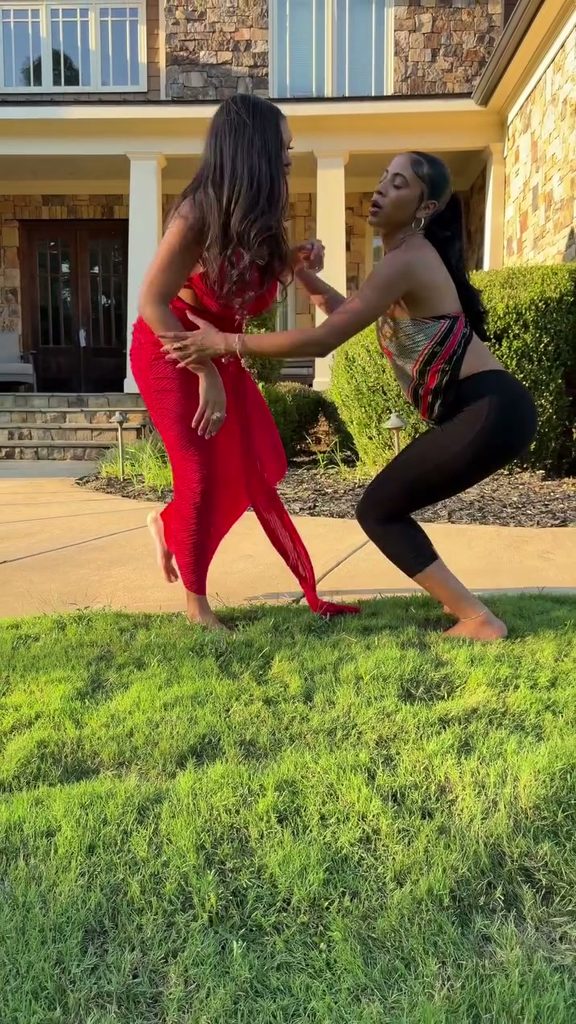
The estate itself has split the fandom between geography and indictment. Team The Lawn Levels Everyone finds the scene almost hopeful. “For three minutes, the richest address in the saga worked exactly like the poorest porch: a woman got bad news, ran, fell, and was held by her friend in the grass. Money didn’t get a vote. The lawn didn’t care who owned it; grief sat on it the way grief sits everywhere, and the only hierarchy left standing was the one between people who descend and people who don’t. That’s not Wayne’s estate anymore — that’s everybody’s ground, and Shayla and Honey Pot owned more of it by the end than he did.” They argue the afternoon democratized the mansion: the grass acquitted itself even if its owner didn’t. Team Money Watched and Did Nothing refuses to let the setting off as scenery. “That house is the point. He had a mansion full of private rooms to tell her in — a study, a kitchen, a whole architecture of discretion — and the confession still happened never, the question happened outdoors, and the comfort happened from a friend in leggings while the estate’s owner supervised from the summit like a landlord of the truth. Wealth didn’t fail to protect Shayla. It succeeded at protecting Wayne, exactly as designed: distance, altitude, plausible deniability with hedges. The lawn didn’t level anything. It sloped — toward him.” They argue the property is the switchboard’s true accomplice: bought elevation, spent as silence. Democracy or design — when betrayal lands on a rich man’s lawn, does the grass make everyone equal, or does the gradient tell you who the ground belongs to? Drop your team in the comments. Because the estate saw everything… and estates, unlike friends, never testify — they just appreciate


